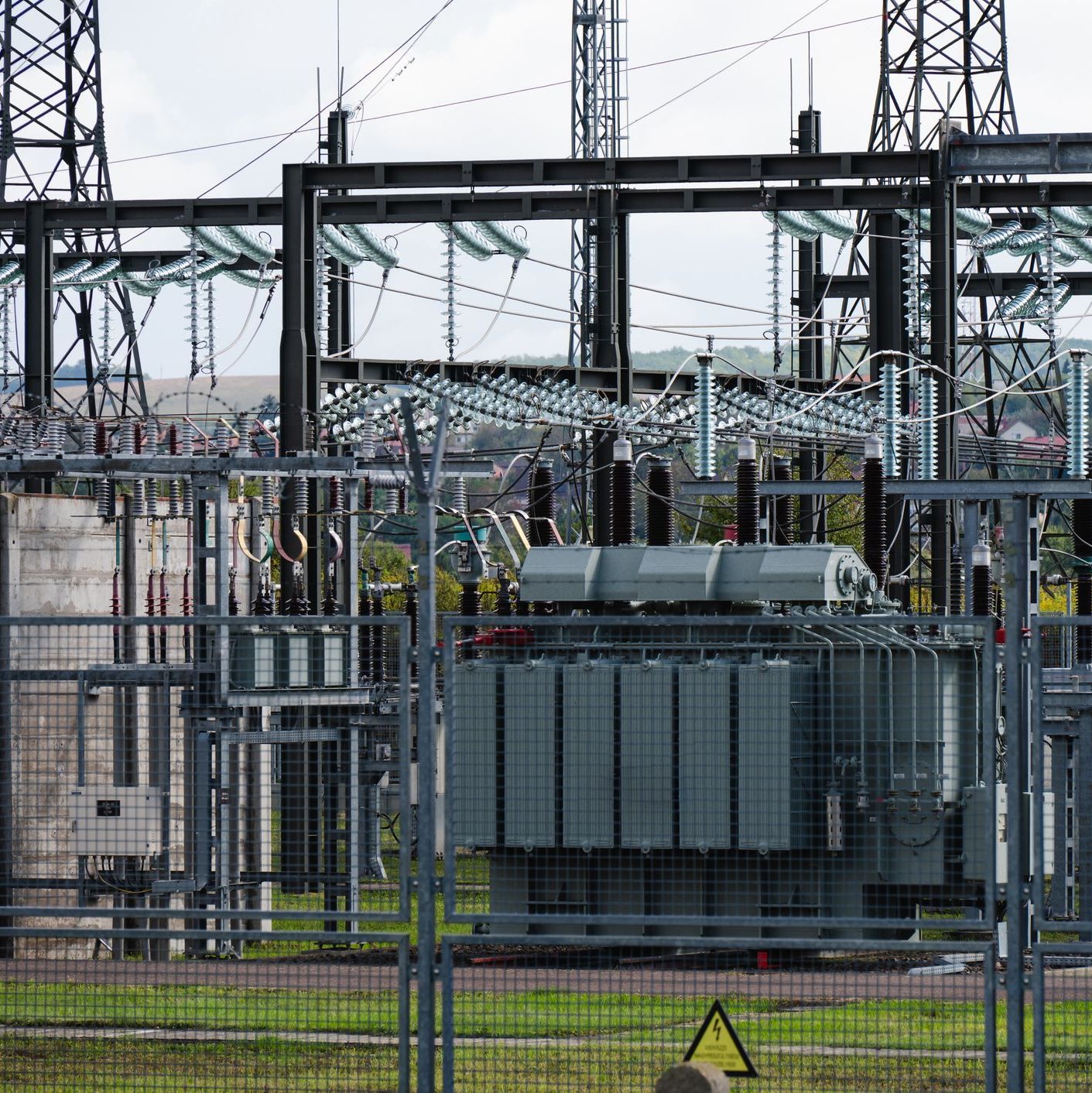
Tesla Is Building Transformers. Here’s What That Means for the Electrical Manufacturing Talent Market.
Let me tell you what kept coming up in my conversations last fall and came to the forefront again yesterday. Not once but twice in the last 48 hours. Tesla. Transformers. Houston. At RE+ in September 2025, Tesla made it clear that transformers are a bottleneck and signaled a move toward bringing that capability in-house as part of its Megafactory strategy, with timing tied to the second half of 2026. I don’t know about y’all, but not a lot scares me…except having to compete against Tesla. Let’s face it, Musk is crazy like a fox and has unlimited resources. For anyone in electrical manufacturing, this isn’t just an interesting headline. It is going to be the biggest disruptor I’ve seen in my career.
At RE+ in Las Vegas in September 2025, Tesla unveiled the Megablock — a pre-engineered 20 MWh energy storage system that integrates four Megapack 3 units with a medium-voltage transformer and switchgear into a single deployable block.
The transformer is not incidental to this product. It is structural to it.
Tesla’s rationale was straightforward: transformers have been a persistent bottleneck. Multi-year lead times. Supply constraints. Project delays. By bringing transformer production in-house, they eliminate a critical dependency and compress their own deployment timelines.
That logic is not new. It is exactly how Tesla has approached every other component that has ever stood between them and scale. And they have a track record of actually executing on it.
The transformer industry has been under demand pressure for years. Grid modernization, data center buildout, renewable interconnection, and aging distribution infrastructure — all of it has pushed lead times and backlogs to historic levels. None of that is news to anyone reading this.
What Tesla’s entry adds is not more demand on the supply chain. It is demand on the talent chain.
There is a real difference between those two things.
You can order steel. You can source laminations. You cannot manufacture thirty years of transformer design experience in twelve months. It doesn’t work that way — and I say that as someone who has spent over two decades exclusively recruiting in this industry.
The engineers and operations leaders who understand how to design, wind, test, and manufacture power transformers — particularly at medium and high voltage — represent a finite pool. Most of them built their knowledge at OEMs that have been running the same product lines for decades. Delta Star. Prolec. Virginia Transformer. Hitachi Energy. SPX Transformer Solutions. The list is not long, and everybody in this industry knows it.
Tesla does not need to hire thousands of people to move this market. They need to hire a few dozen of the right ones. And when they do, the ripple effect across electrical manufacturing will be felt industry-wide.
Passive candidates are going to start moving.
Engineers who have been content in stable OEM roles will start fielding calls differently. A Tesla recruiter calling about a transformer design role is a different conversation than it was two years ago. The brand carries weight across demographics and career stages that traditional OEMs don’t always reach. Candidates who were not looking will start looking. That’s just reality.
Compensation benchmarks are going to shift.
This is the one hiring managers consistently underestimate until it hits their offer process. When a new entrant — particularly one with Tesla’s compensation structure — starts recruiting in a specialty niche, the floor moves. Not dramatically all at once, but steadily and persistently. Once a candidate has a Tesla offer as a reference point, your package is being evaluated against a different benchmark. I’ve watched this happen with other major market entries. It will happen here, too.
Institutional knowledge is going to become more mobile.
The engineers and plant leaders who carry decades of transformer manufacturing knowledge are the same people responsible for training the next generation at their current companies. When they leave, they take more than their own productivity. They take mentorship capacity, tribal knowledge, and, in some cases, customer relationships that took years to build. Backfilling is not a 90-day exercise. Anyone who has tried to replace a 25-year veteran in this industry knows exactly what I mean.
I place senior-level engineers and directors and above in electrical manufacturing. Transformer OEMs, switchgear, substations, data center power — that is all I do, and it is all I have done for 21 years.
So I can tell you with specificity: the candidate pool for experienced transformer professionals is not large. The same names come across my desk. The same people get calls from multiple firms, sometimes in the same week. That is not a networking problem. That is a supply reality.
Grid expansion, data center power demand, and electrification were already tightening this market before Tesla’s announcement. Layer in a well-capitalized new entrant with strong brand appeal and a demonstrated ability to build manufacturing capability fast, and you have a market that is getting tighter, not looser.
The hiring strategy that worked in 2019 is not the hiring strategy that works in 2026.
Waiting for the right candidate to apply is a reactive posture in a market that rewards proactive engagement. Posting a job and waiting is not a talent strategy. It is a hope strategy. And hope is not a plan.
The companies consistently winning searches in electrical manufacturing right now are the ones that have built candidate relationships before the need is urgent, that know how to position opportunity beyond base salary, and that move decisively when a qualified candidate is in front of them.
Tesla’s move into in-house transformer production is one more data point in a trend that has been building for years. The manufacturers who understand that are building pipelines now. The ones who don’t will be scrambling to fill gaps later, with a smaller available pool and a higher price tag to access it.
Foster Conner International specializes in executive search for the electrical infrastructure and power equipment sector. We work exclusively with transformer OEMs, switchgear manufacturers, substation integrators, e-houses, and data center power equipment companies.
If you’d like to talk about what you’re seeing in the market, or what you’re trying to build, let’s talk.